1. Look outside while it runs
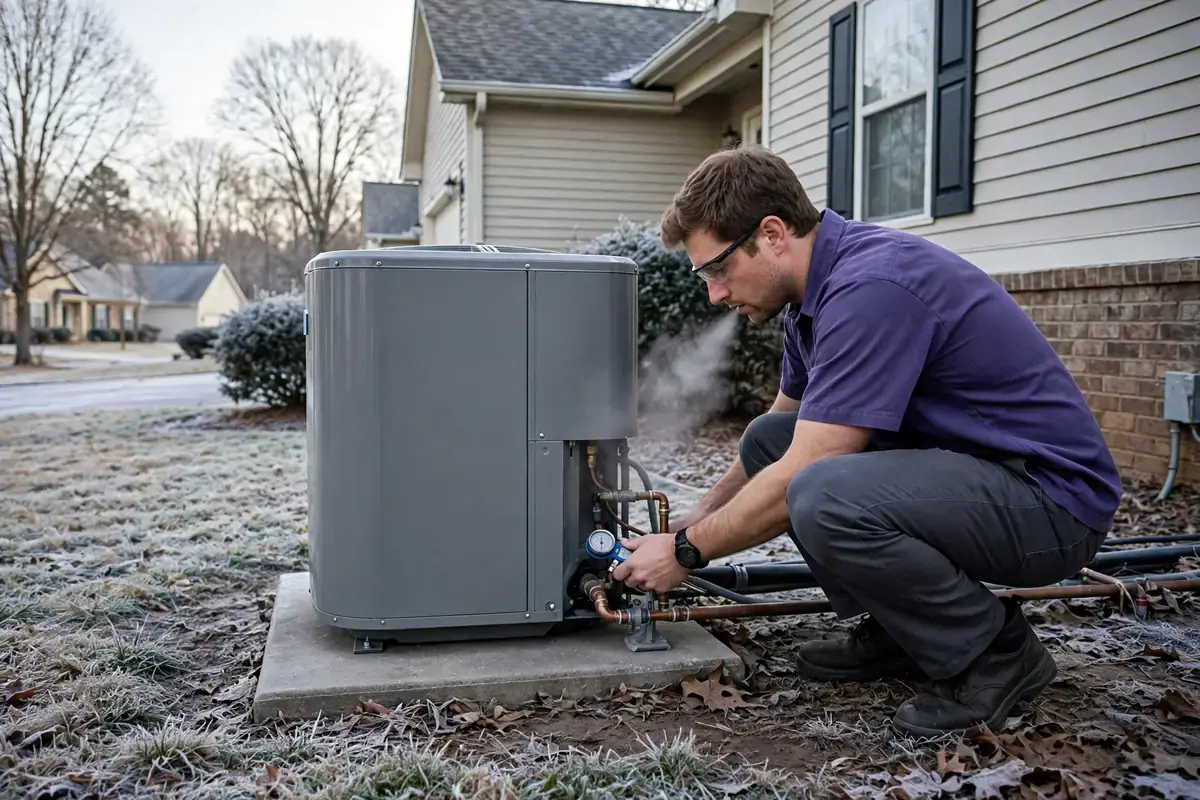
Turn the heat on and walk outside. If the big outdoor unit is humming and the fan is spinning, you almost certainly have a heat pump. If the outdoor unit sits silent all winter, you have a furnace.
Heating Help · Furnace or Heat Pump
No heat? Start here. Whether you've got a furnace, a heat pump, or no idea which, we'll figure it out and give you an honest answer.
(615) 412-2495No heat? Start here
Most "no heat" calls we get in Gallatin are solved by something simple, and we'd rather you check these first than pay for a visit you didn't need:
If you've run through the list and still have no heat, it's time for a professional diagnostic. When you call our Gallatin HVAC team at (615) 412-2495, tell us what you checked, and we'll take it from there.
Identify your system
Half the homeowners who call us don't know what kind of heating system they have, and that's completely fine. Here's the fastest way to find out:
Turn the heat on and walk outside. If the big outdoor unit is humming and the fan is spinning, you almost certainly have a heat pump. If the outdoor unit sits silent all winter, you have a furnace.
See a gas meter on the side of the house or a gas pipe running to the indoor unit? That's a gas furnace. All-electric home with no gas service? Very likely a heat pump.
Settings labeled "em heat" or "aux heat" mean heat pump. The model plate on the indoor unit settles it for good. Still unsure? Send us a photo and we'll tell you.
Our heat pump vs. furnace guide for Middle TN explains how each system works and which one suits different Gallatin homes.
Two systems, two playbooks
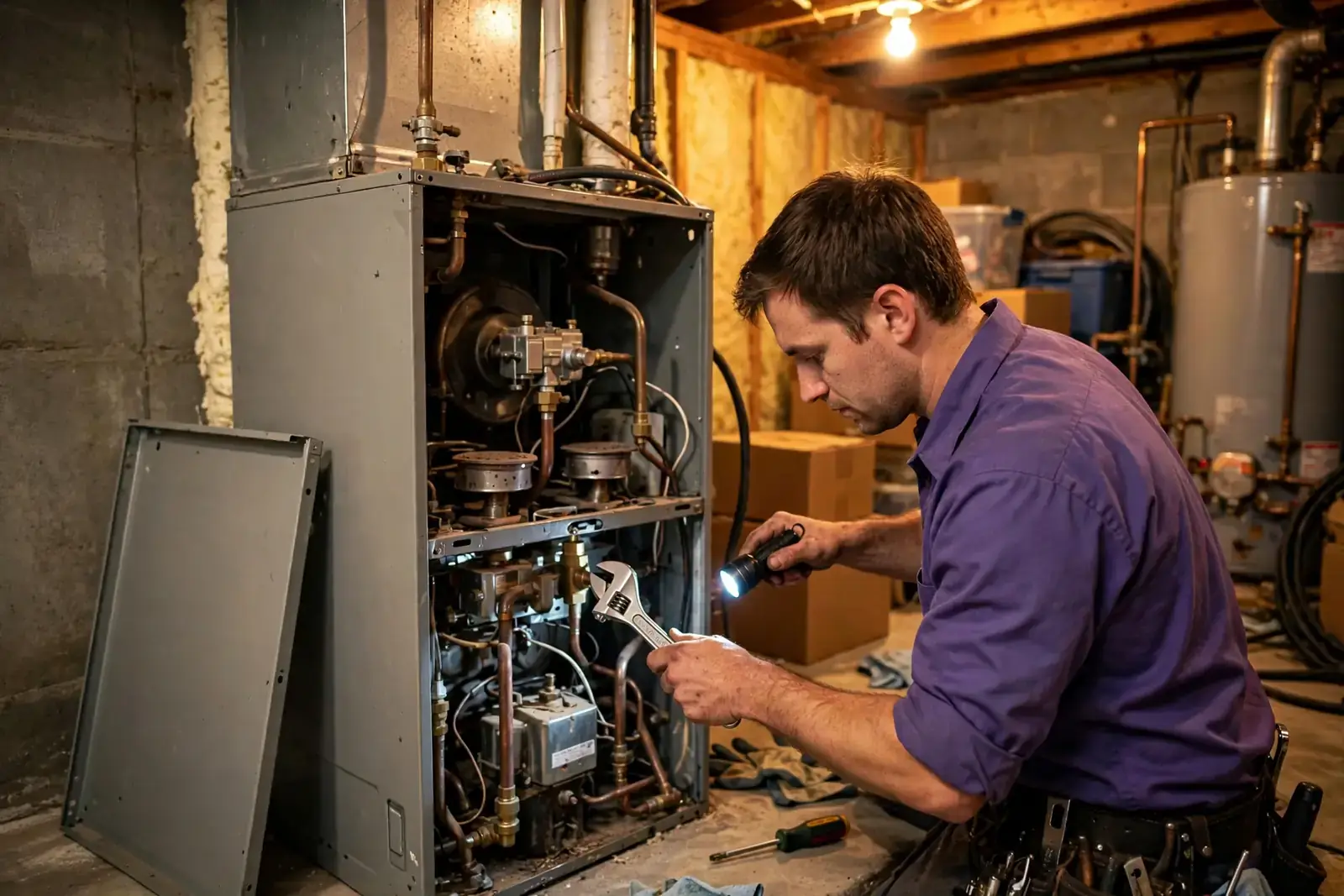
Gas furnaces burn fuel to make heat. When they stop, it is usually an ignition or airflow issue, and carbon monoxide safety is part of every visit we make.
Heat pumps move heat instead of making it, so they fail differently: refrigerant charge, reversing valves, defrost cycles, and backup electric heat that spikes winter bills.
If you have a gas furnace, equipment from manufacturers like Lennox is built around the same core parts we service every day, so parts availability is rarely an issue. And whatever system you have, the EPA's guidance on home heating safety is worth a read before winter sets in.
Honest process
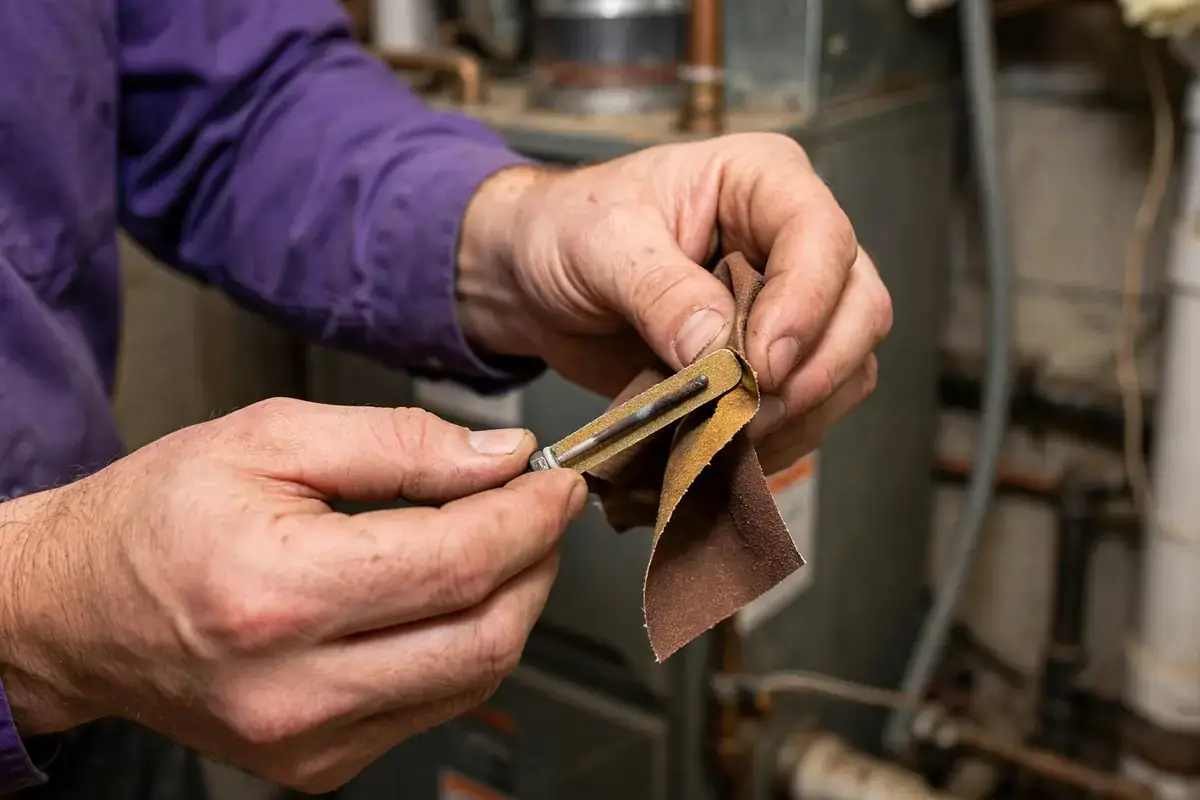
You'll never get a vague "it needs a part" from us. Here's what happens when Gallatin HVAC Repair Pro shows up for a no-heat call:
If the honest answer is "this one's done," we'll tell you that too, and show you the heating replacement numbers so you can decide with real information.
Repair or replace
This is the question behind every repair call, and we answer it the same way every time: with the numbers. Repair is usually the right call when the system is under 12 to 15 years old and the problem is a single failed part. Replacement starts making sense past 15 years, when the repair is a major component, or when breakdowns have become a pattern.
A regular heating tune-up stretches the repair side of that equation, and our fall heating checklist shows exactly what maintenance covers. When replacement does win, we size and install the new system properly, because a surprising number of comfort problems trace back to equipment that was never right for the house.
Serving all of Gallatin
We run heating calls all over town: the lakefront homes in Fairvue Plantation, the growing neighborhoods of Clear Lake Meadows and Grandview Estates, the corridors along TN-386, and the older homes near the historic square, where original heating systems are still common. Whether your system is two years old or twenty, the diagnostic is the same: honest, thorough, and priced upfront.
Common questions
Start with the basics: confirm the thermostat is in heat mode and set above room temperature, check that the breaker hasn't tripped, and make sure the filter isn't completely clogged. If the system still won't heat, runs constantly without warming the house, or makes unusual noises, it needs a professional diagnostic. The cause could be anything from a failed ignitor to a reversing valve.
Three quick checks: walk outside while the heat is running. If the outdoor unit is running too, you likely have a heat pump. Look at your fuel: a gas meter or gas pipe leading to the indoor unit means a gas furnace. Check the thermostat. Settings labeled 'em heat' or 'aux heat' indicate a heat pump. When in doubt, the model plate on the indoor unit will tell you.
Repair makes sense when the system is under about 12 to 15 years old and the fix is a single component. Replacement becomes the better value when the system is past 15 years, needs a major repair like a compressor or heat exchanger, or has been breaking down repeatedly. We'll always show you both options with real numbers so you can decide.
Our diagnostic visit includes identifying your system type, testing the thermostat and controls, inspecting the ignition or heat pump components, checking airflow and filters, and running a combustion and carbon monoxide safety check on gas systems. You get written repair options with upfront pricing before any work starts.
The most common causes are backup electric heat running too often on heat pump systems, a clogged filter forcing longer run times, a system that's low on refrigerant or losing combustion efficiency, and leaky ductwork wasting heated air. A diagnostic pinpoints which one is driving your bill so you're not guessing.
Honest heating diagnostics from Gallatin HVAC Repair Pro. Call now for service across Gallatin and Sumner County.
(615) 412-2495 Call Now for Heating Repair