Furnaces & heat pumps · Sized for Middle TN winters
Heating Installation & Replacement in Gallatin, TN
Furnace or heat pump? We'll help you pick the right system for a Middle Tennessee winter, size it properly, and install it right the first time.
(615) 412-2495- Honest furnace-vs.-heat-pump guidance
- Load-calculation sizing for your home
- Written options: repair and replace, side by side
The big decision
Furnace or heat pump: which fits a Middle Tennessee winter?
Short answer: most Gallatin homes do well with either, but heat pumps have a real edge here. Our winters are mild compared to the rest of the country: lots of 30s and 40s, with only occasional dips into the teens. A modern heat pump moves heat from the outside air into your home far more efficiently than it can make heat from scratch, so it costs less to run through most of the season. When it's truly frigid, backup heat kicks in to help. If you want the full breakdown, read our comparison of heat pumps vs. furnaces for Middle Tennessee.
| Heat pump | Gas furnace | |
|---|---|---|
| Best for | Most Gallatin homes; lower operating cost most of winter | Homes with existing gas lines; homeowners who prefer gas heat |
| How it heats | Moves heat from outdoor air inside; very efficient above freezing | Burns natural gas or propane; steady, powerful heat at any temperature |
| Cold snaps | Uses auxiliary electric backup on the coldest nights (costs more those days) | Unaffected by outdoor temperature |
| Bonus | Doubles as your air conditioner in summer | Pairs with a standard AC for cooling |
| Consider | Thermostat must be set up correctly for heat pump mode | Needs gas line, venting, and annual safety checks |
There's no universal winner. It depends on your home, your fuel options, and your budget. That's exactly what our in-home consultation sorts out. And if your current system just needs attention, our heating repair team covers both furnaces and heat pumps, with dedicated furnace repair and heat pump repair services.
Know the signs
Is your heating system ready for retirement?
October in Gallatin is when furnaces fire up for the first time since spring, and it's also when tired systems show their age. Watch for these signs:
- Age: furnaces typically last 15–20 years, heat pumps 12–15. Past that, every repair is a gamble.
- Repeat breakdowns: two or more repairs in the last couple of winters is a pattern, not bad luck.
- Rising winter bills: if your usage hasn't changed but the bill has, efficiency is slipping.
- Uneven heat: some rooms toasty, others chilly, no matter what the thermostat says.
- Strange sounds or smells: banging, rattling, or a persistent burning smell that doesn't clear after the first fall cycle.
- Safety red flags: a cracked heat exchanger or CO detector alarms mean stop using the furnace and call immediately.
If you're seeing one or two of these, a heating repair visit can tell you exactly where things stand. If you're seeing most of them, let's talk replacement before the coldest week of January makes the decision for you.
Install day
What does heating installation day look like?
Most furnace or heat pump replacements take one day; full system changeouts can run into a second. Here's the usual flow:
- Arrival and walkthrough: we confirm the equipment plan, protect your floors, and shut everything down safely.
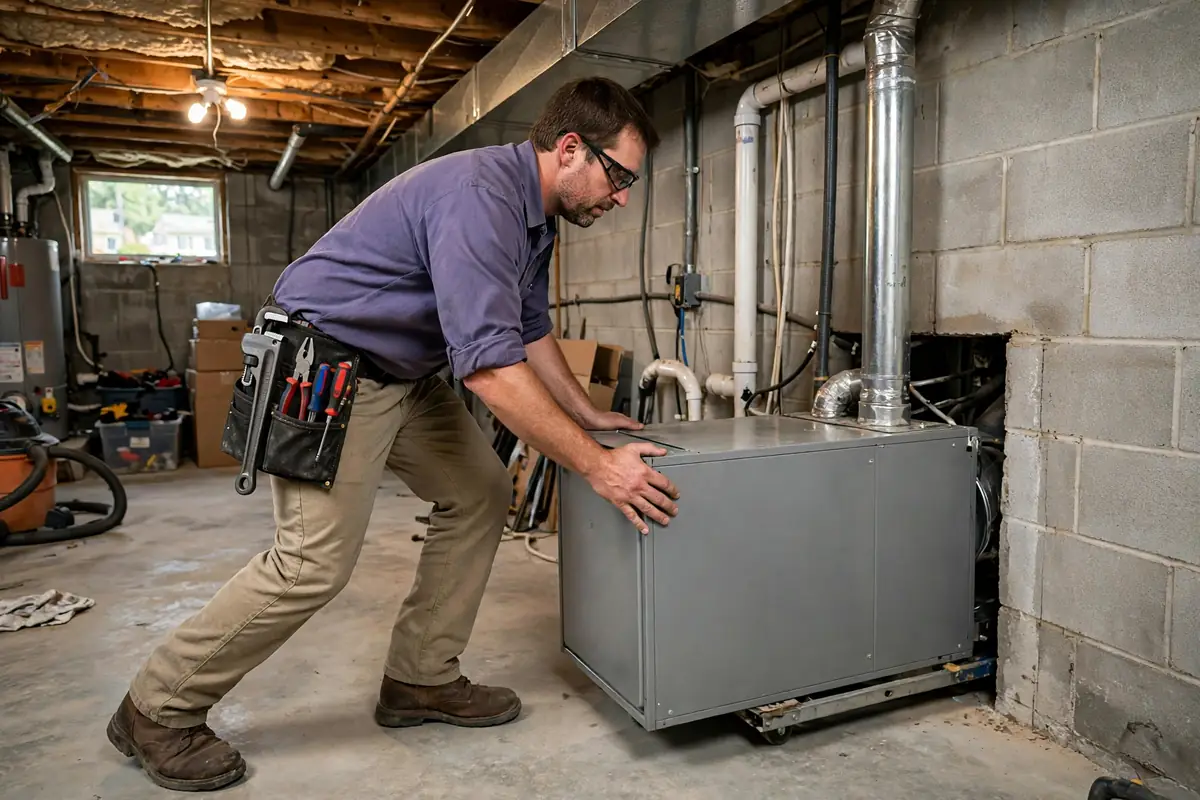
- Old equipment out: the old furnace or heat pump comes out and gets hauled away for recycling.
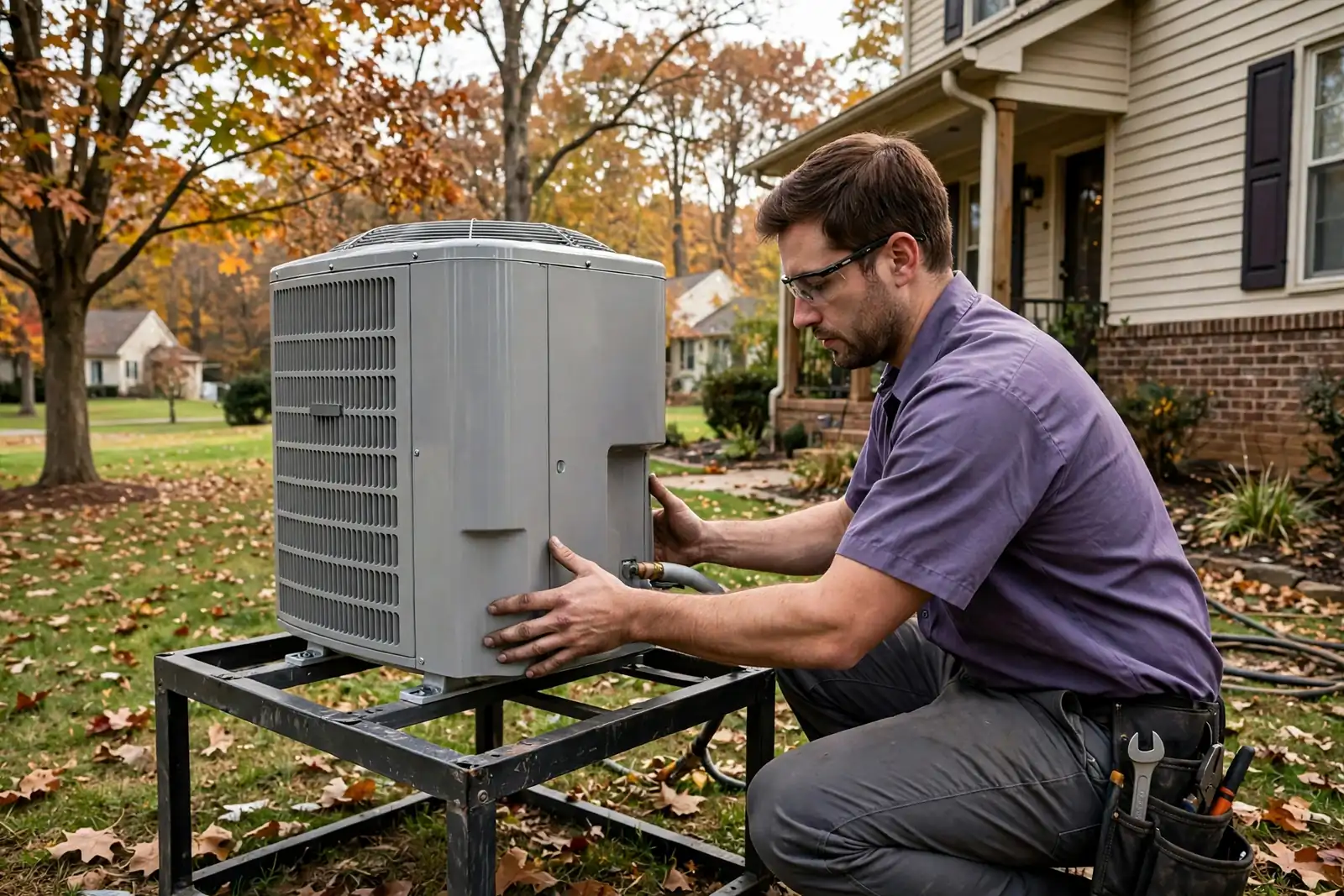
- New equipment set: the furnace goes in level and secured; a heat pump's outdoor unit goes on a raised stand so winter weather and drainage don't cause trouble.
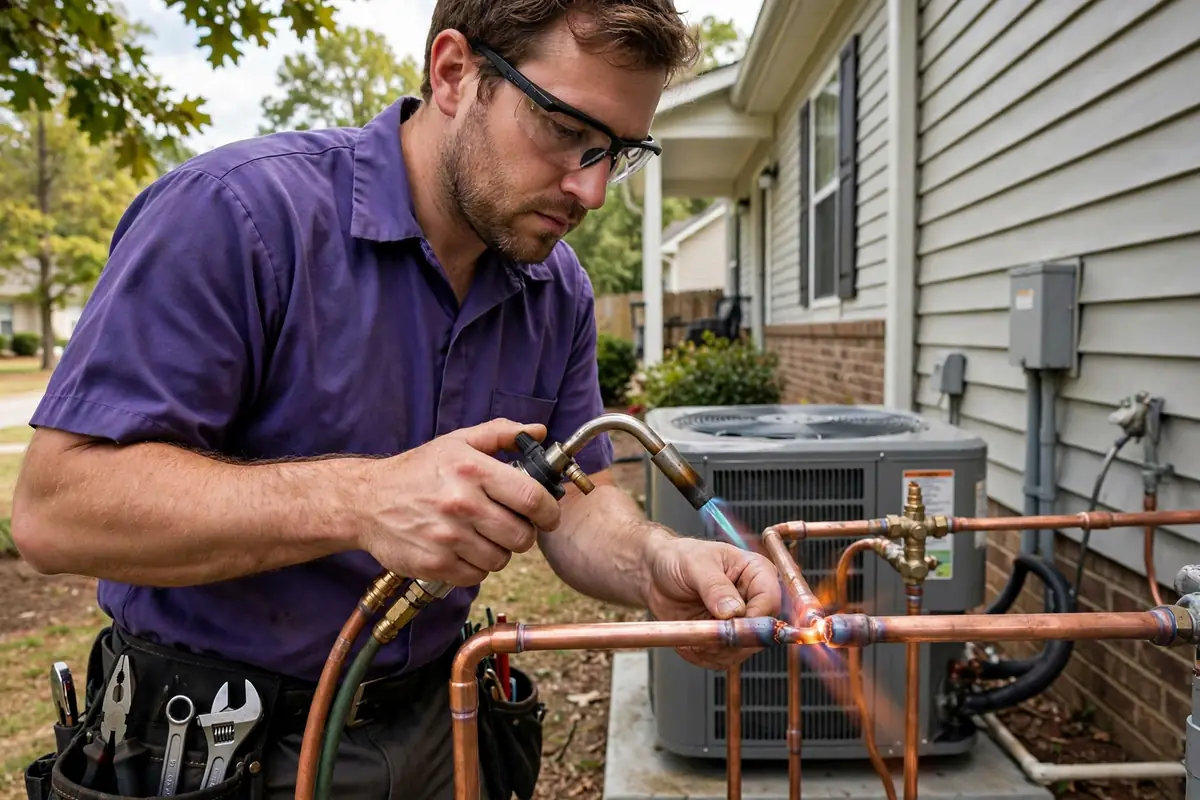
- Connections: gas lines and venting for furnaces (leak-tested and up to code), refrigerant lines and electrical for heat pumps, duct transitions sealed tight.
- Startup and calibration: we charge, test, and calibrate, then verify temperature rise, airflow, and safe operation across every mode.
- Your walkthrough: thermostat setup, filter location, and what normal operation looks and sounds like.
Straight talk on price
What affects the cost of a new heating system?
Anyone who quotes you a price over the phone without seeing your home is guessing. Here's what actually moves the number, so you can read any quote with clear eyes:
- Equipment type and size: a basic single-stage furnace costs less than a variable-speed heat pump, and bigger homes need bigger equipment.
- Efficiency rating: higher-efficiency systems cost more up front and less to run. Compare energy efficiency ratings against your expected years in the home.
- Ductwork condition: leaky or undersized ducts may need repair or replacement to let the new system perform.
- Fuel and venting: converting from electric to gas (or the reverse) adds line, venting, and electrical work.
- Permits and code upgrades: legitimate installations are permitted and inspected in Sumner County.
We're brand-neutral: we install equipment from every major manufacturer, including Trane, Carrier, Lennox, and Goodman. Like with air conditioners, the quality of the installation matters more than the logo on the box: correct sizing, sealed ducts, proper charge, and clean venting decide how the system runs for the next 15-plus years.
Want to keep that new system running like new? A yearly maintenance tune-up catches small issues before they become January emergencies. And if you're weighing a ductless mini-split for a garage, addition, or bonus room, those pair nicely with a new central system.
Local & connected
Heating installations across Gallatin, TN 37066
Our techs install furnaces and heat pumps from Cambridge Farms to Grandview Estates and everywhere along the TN-386 corridor. As your local heating and air service in Gallatin, TN, Gallatin HVAC Repair Pro will give you both options, repair and replacement, in writing, so the decision is yours, made with real numbers.
Curious how backup heat affects winter bills? Our article on emergency and auxiliary heat bills explains what to watch for each January.
Common questions
Heating installation questions, answered straight
Look at age, repair history, and efficiency together. A furnace under 15 years old with one isolated problem is usually worth fixing. But if it is 18 to 20 years old, has a cracked heat exchanger, or has needed repairs two winters in a row, replacement is usually the better financial call. We will price both options honestly so you can compare.
Yes, for the vast majority of a Middle Tennessee winter. Modern heat pumps heat efficiently down into the 30s and below, and Gallatin rarely sees extended deep freezes. On the coldest nights the system uses backup heat to help, which costs more to run, so proper sizing and thermostat setup matter. A heat pump paired with the right backup is a strong fit for our climate.
Auxiliary heat is electric resistance backup that kicks in when your heat pump cannot meet demand on very cold days. Emergency heat forces the system onto that backup full time. Electric resistance heat costs several times more than heat pump heat, so a thermostat stuck on emergency heat can double a winter bill. If your bill spiked, check that the thermostat is not set to EM heat.
Compare the equipment size and efficiency, whether a load calculation was performed, the scope of ductwork or venting changes, the thermostat, permits, and the labor warranty terms. When prices are close, the company that measured your home and explained its sizing usually delivers the better installation.
Ready for reliable heat this winter?
Call for a written quote: furnace and heat pump options, sized for your home.
(615) 412-2495 Call Gallatin HVAC Repair Pro