Gallatin's heating & air pros — serving Sumner County, TN  ·  Call (615) 412-2495
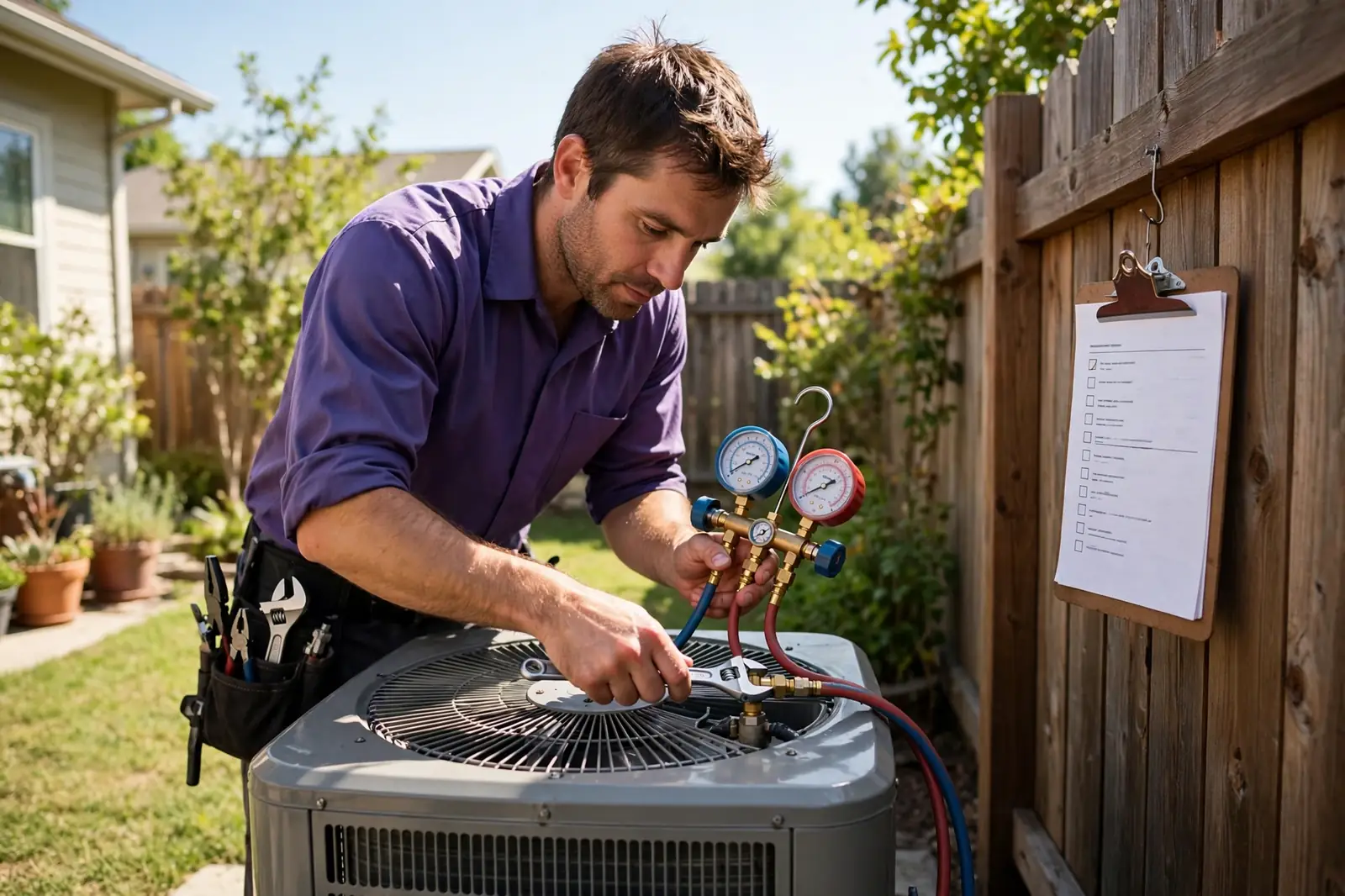
Technician performing an AC tune-up with gauges on an outdoor condenser in Gallatin

HVAC Maintenance & Tune-Ups

HVAC Maintenance & Tune-Up in Gallatin, TN

October is tune-up season in Gallatin. Your furnace has been quiet all summer; the first cold snap is when weak parts give out. Book a fall tune-up and catch it before the cold does.

(615) 412-2495
  • Written checklist after every visit
  • Repair-first, no scare tactics
  • Fall heating & spring cooling tune-ups

A tune-up is how you vet an HVAC company

Every fall, Gallatin homeowners search for a "fall tune-up" as a first step with a new HVAC company, and that makes sense. A tune-up is low-risk, low-cost, and revealing: you see how a tech treats your equipment, whether the findings are explained or exaggerated, and whether the recommendations come with pressure or with patience. As trusted HVAC service in Gallatin, Gallatin HVAC Repair Pro treats tune-ups as auditions we intend to pass.

The pattern we see across Sumner County every October is predictable: furnaces and heat pumps that sat silent through the summer get their first real workout on the first cold night, and the weak link, a dirty flame sensor, a tired igniter, a blower motor on its last legs, gives out at 10 PM when it is 40 degrees outside. A fall tune-up finds those failures on a sunny afternoon instead.

Your fall heating checklist

Every October, run through this list. Most of it is free and takes an hour.

  • Schedule the heating tune-up before the first cold snap. October is the sweet spot: schedules are open and you beat the November rush.
  • Replace the filter. A fresh filter for heating season is the cheapest insurance your system gets.
  • Test heat mode early. Flip the thermostat to heat on a mild day and let it run 10 minutes. Weird smells that burn off are normal; smells that don't are not.
  • Check carbon monoxide detectors. Test every unit, replace batteries, and replace any detector older than its printed lifespan. Gas furnaces and CO safety go together.
  • Clear the outdoor unit. Fall leaves pack around condensers and heat pumps fast. Keep two feet clear on all sides and gently clear debris.

Want the full version? Our fall heating checklist for Gallatin homeowners walks through each step in detail, including what to do if the test run reveals a problem.

What a real tune-up includes

Every visit covers your AC and your heating, in the right season. Here's the actual list:

AC & cooling tune-up

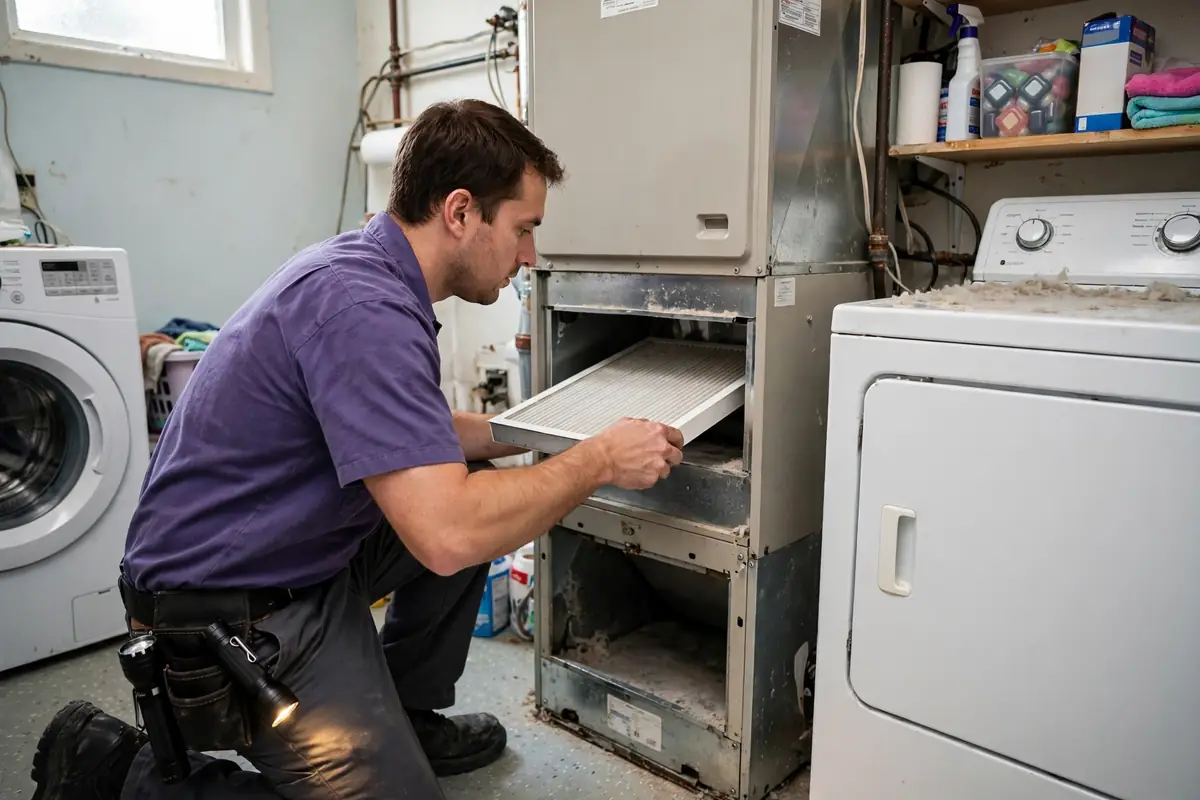
Clean or replace the filter, clean the condenser and evaporator coils, check refrigerant levels and look for leaks, test capacitors and contactors, tighten electrical connections, inspect the blower and belt, verify thermostat calibration, and measure temperature drop across the coil.
Furnace tune-up

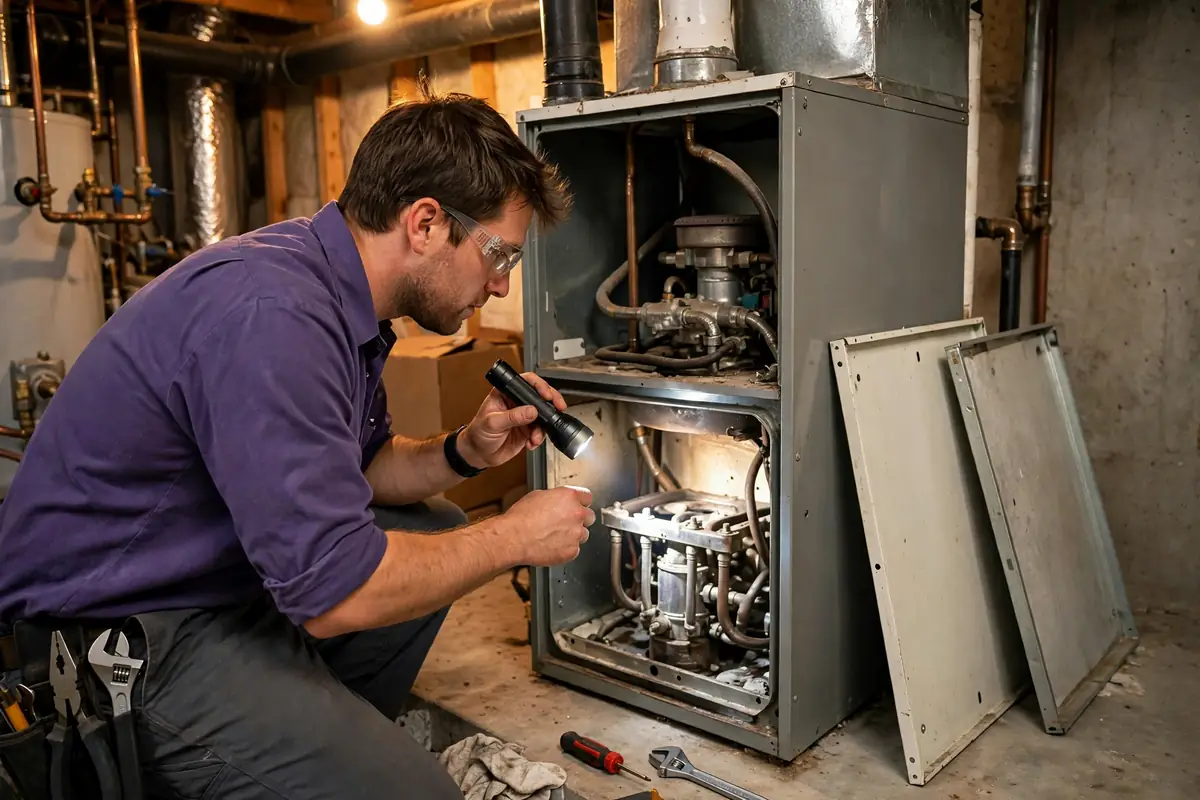
Inspect the heat exchanger for cracks, clean the burners and flame sensor, test the igniter, check gas pressure and connections, inspect the flue, test safety controls and limit switches, and check the blower and filter.

Heat pump tune-up

All of the cooling checks plus reversing valve operation, defrost cycle testing, backup heat strip verification (so emergency heat doesn't run silently all winter), and refrigerant checks tuned for heating mode.

You get a written report after every visit: what we did, what we found, and what (if anything) we recommend, with prices attached. That report is yours to keep, and it doubles as the service record your manufacturer wants if you ever file a warranty claim.

What a tune-up can't do

Honest maintenance talk includes the limits. A tune-up will not:

  • Make a 20-year-old system young again or add years beyond its design life
  • Fix a refrigerant leak by itself (topping off without finding the leak is a bandage, not a repair)
  • Substitute for repairs your system genuinely needs

And a tune-up should never be a sales ambush. If a technician finds real problems, you deserve photos, plain explanations, and written prices, not a scary story and a same-day discount deadline. That is our house rule, and it applies on every visit from Clear Lake Meadows to Cambridge Farms and everywhere in between.

For broader ENERGY STAR maintenance guidance, their homeowner resources line up closely with what we do on every visit.

Technician installing a clean air filter in a furnace return during a tune-up

Small problems we catch on tune-ups

The fixes that cost the least are the ones found earliest. Recent examples from Gallatin tune-ups:

  • A swollen capacitor caught in October, replaced before it killed a compressor in January
  • A flame sensor cleaning that ended a furnace's habit of shutting off after 30 seconds
  • A thermostat quietly set to trigger emergency heat, found before the first winter bill
  • Loose electrical connections tightened before arcing damaged a control board
Technician inspecting a gas furnace burner compartment with a flashlight during a fall tune-up

None of these were emergencies when we found them. Every one of them could have become one. That is the whole case for maintenance, and our guide to how often your system needs service lays out the schedule that keeps it that way.

When maintenance finds something bigger

Sometimes a tune-up uncovers a problem worth fixing now rather than later. When that happens, you get the same treatment our AC repair, heating repair, and emergency repair customers get: a straight diagnosis, written options with prices, and zero pressure. Repair first when a repair makes sense; replace honestly when it doesn't.

Common questions

Maintenance questions from Gallatin homeowners

Twice a year: a cooling tune-up in spring and a heating tune-up in fall. A real tune-up includes cleaning or replacing the filter, cleaning the condenser and evaporator coils, checking refrigerant levels and looking for leaks, tightening electrical connections, testing capacitors and contactors, inspecting the blower and belt, checking the thermostat calibration, and verifying temperature drop across the coil. You should get a written checklist of what was done and what was found.

Plenty. Change or clean your air filter every one to three months. Keep the outdoor unit clear of leaves, grass, and stored items with two feet of space around it. Check that the thermostat is set to the right mode and the fan is on AUTO. Make sure supply vents are open and not blocked by furniture. What to leave to a technician: anything involving refrigerant, electrical panels, gas lines, or opening the equipment cabinet.

For most Gallatin homes, yes, if the plan is honest. A good plan bundles your spring and fall tune-ups, gives you priority scheduling, and often includes small discounts on repairs. The value breaks down if the plan pressures you into repairs you do not need or locks you into long contracts. Ours is simple: two tune-ups a year, priority scheduling, and a written report after every visit. No long-term contract required.

It can. Most manufacturer warranties require regular professional maintenance, and manufacturers can ask for service records when you file a claim. Skipping tune-ups does not automatically void everything, but it gives the manufacturer grounds to deny a claim, especially if neglect contributed to the failure. Keep your tune-up receipts; they are the cheapest warranty insurance you can buy.

In Gallatin, the fall heating tune-up edges out spring, because furnaces and heat pumps sit idle all summer and the first real cold snap exposes every weak point at once. But the honest answer is that both matter: spring catches refrigerant and coil problems before the cooling season, and fall catches ignition, safety, and airflow problems before heating season. If you only do one, do fall.

Beat the first cold snap: book your fall tune-up

October slots fill fast. Call now and get your heating checked before the cold does.

(615) 412-2495 Call Gallatin HVAC Repair Pro
Call (615) 412-2495 Get Service