Failed hot-surface ignitor
The ignitor lights the burners thousands of times a year and eventually cracks or wears out. When it fails, the furnace clicks, glows, or does nothing, and the burners never catch.
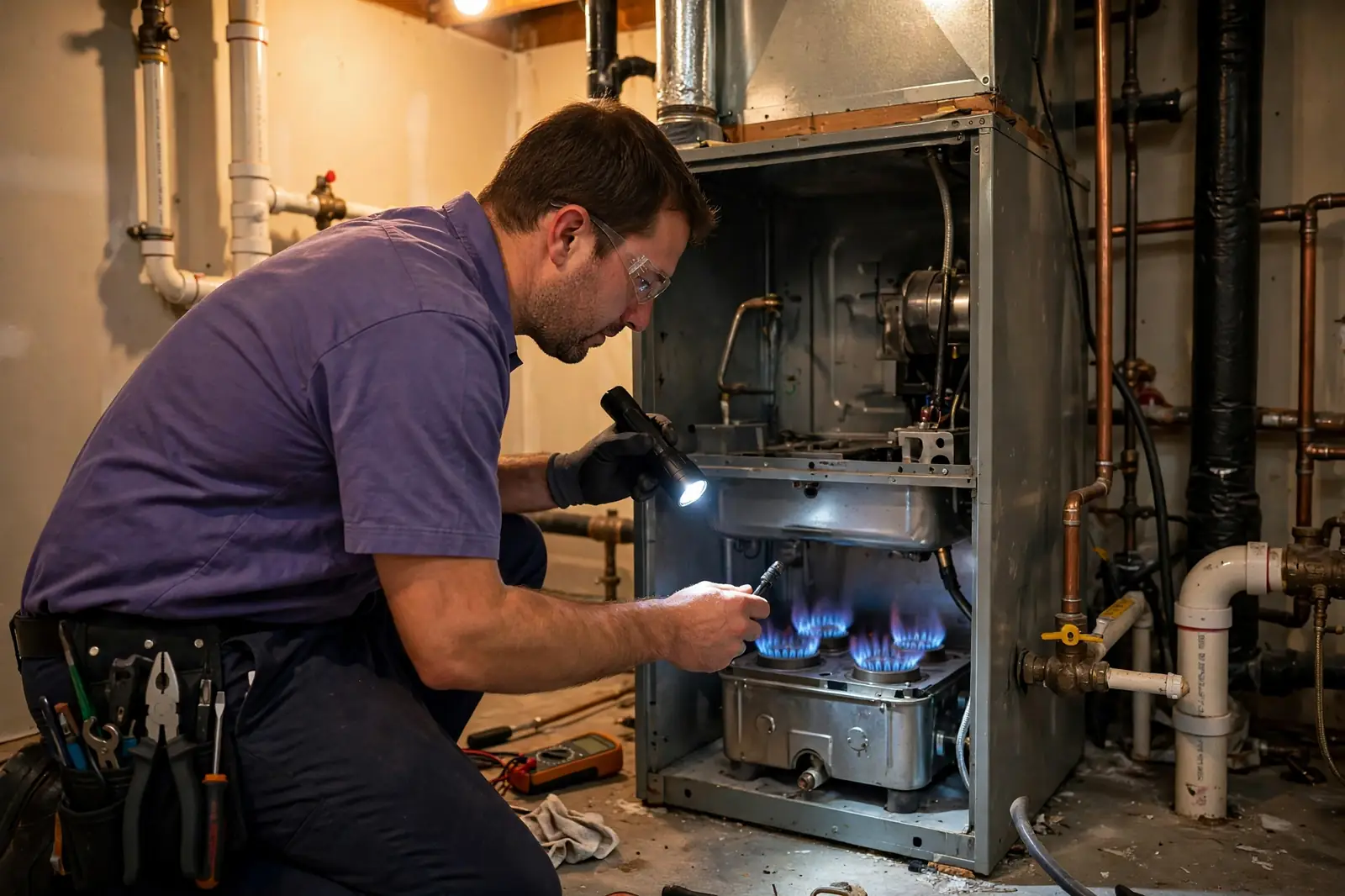
Gas Furnace Repair · Gallatin & Sumner County
When your gas furnace quits, you want a straight answer: what broke, what it costs to fix, and whether it's worth fixing. That's exactly how we diagnose.
(615) 412-2495October in Sumner County
Every fall in Gallatin, the same thing happens: a furnace that sat idle all summer gets asked to fire for the first time, and nothing happens. After months of only running the blower for AC, the parts that fail most on first startup are the ignitor and the flame sensor. They're small, they're inexpensive to fix, and they're the reason half the "no heat" calls in October are resolved in a single visit.
Try this now: switch your thermostat to heat mode, set it a few degrees above room temperature, and let it run ten minutes. If it heats, you're ahead of the rush. If it blows cold or cycles without lighting, you'll be glad you found out before the first genuinely cold night. For furnace repair in Gallatin, TN that starts with an honest diagnosis, call Gallatin HVAC Repair Pro at (615) 412-2495.
If your furnace passes the test, consider locking in a fall tune-up before the schedule fills up. A fall heating tune-up catches weak ignitors, dirty sensors, and safety issues while the weather is still mild. Our fall heating checklist walks through what we check and what you can check yourself.
Common gas furnace problems
The ignitor lights the burners thousands of times a year and eventually cracks or wears out. When it fails, the furnace clicks, glows, or does nothing, and the burners never catch.
The flame sensor proves the burners lit. When it's coated with soot or corroded, the burners light for a few seconds, cut out, and the furnace retries until it locks out.
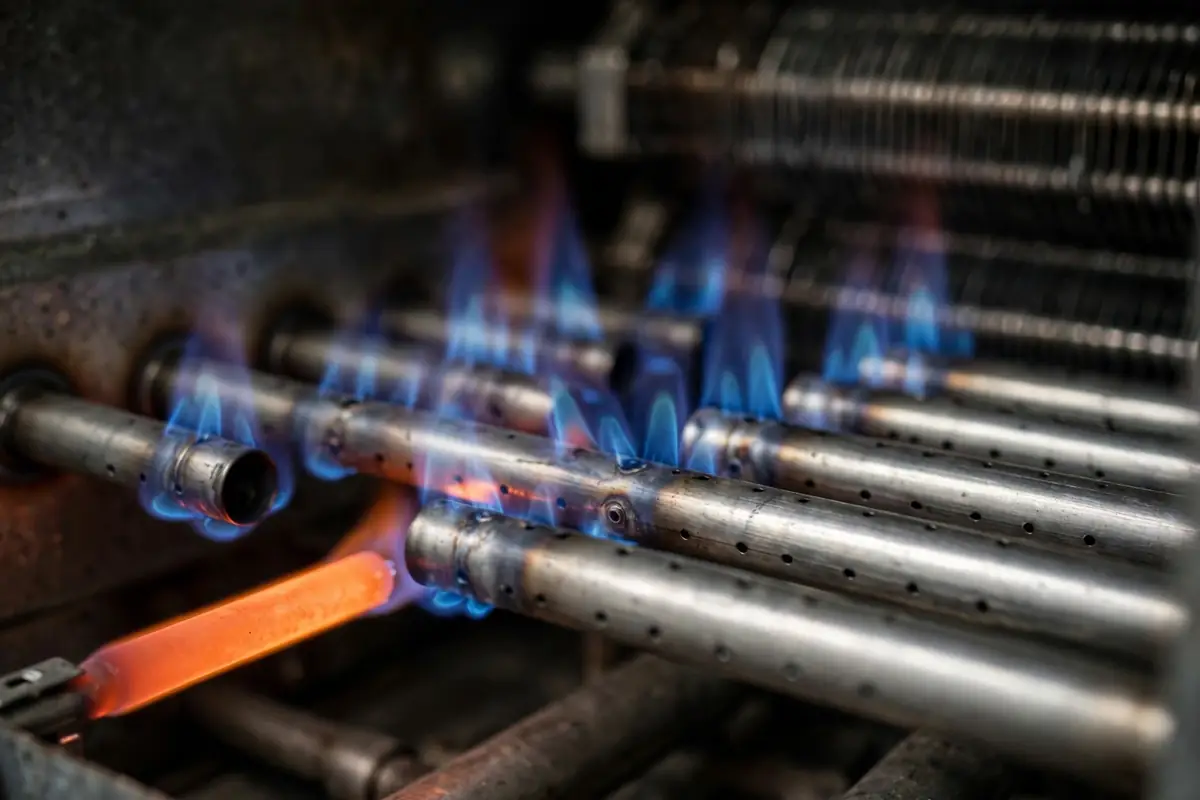
Dirty, rusted, or misaligned burners produce uneven flames and poor heating. We clean and adjust burner assemblies so the flame burns blue and steady.
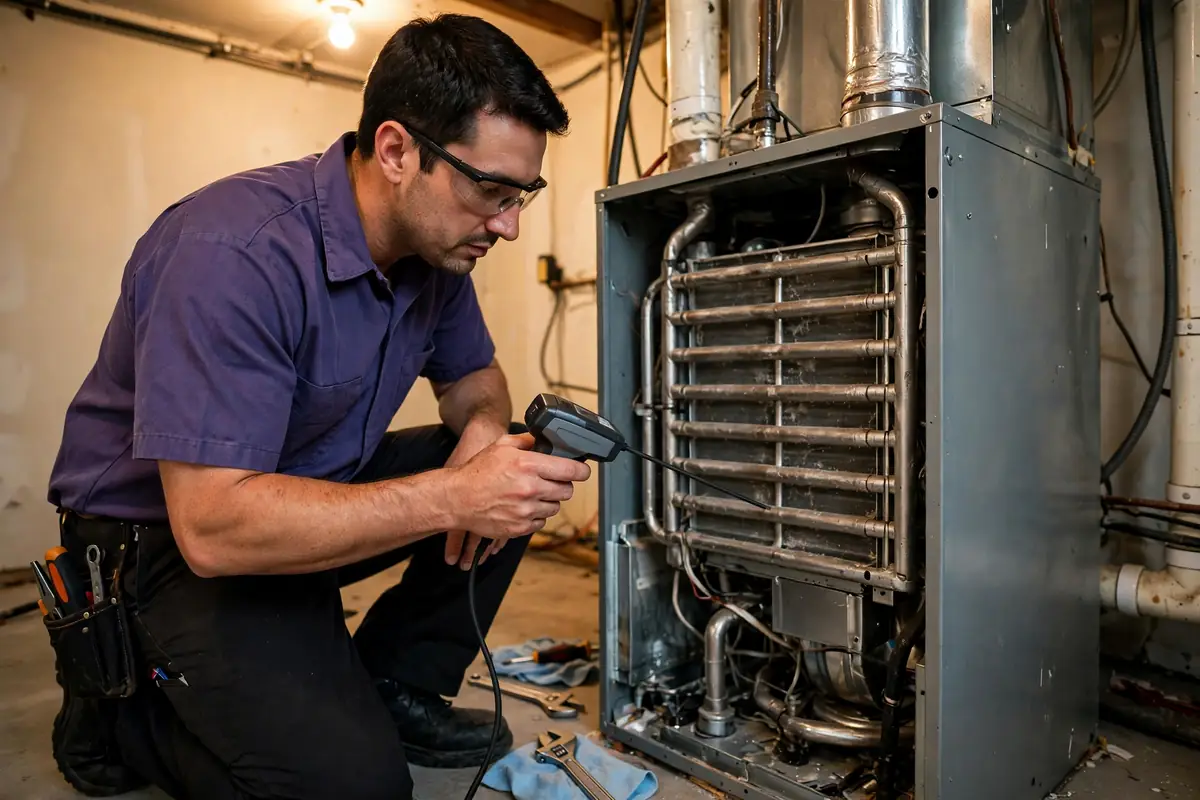
A cracked heat exchanger can let combustion gases, including carbon monoxide, into your air supply. This is a safety call, not a patch job, and we'll tell you honestly when we find one.
A furnace that fires, shuts off, and fires again is often overheating from restricted airflow, a clogged filter, or a failing limit switch. It wastes gas and wears parts fast.
Weak airflow, a blower that never stops, or a thermostat that reads fine but won't call for heat are usually electrical or control issues we trace and fix directly.
Ignitors & flame sensors
Most modern gas furnaces use a hot-surface ignitor, a small ceramic element that glows red-hot to light the gas. They're consumable parts: after years of heating cycles, they crack. An ignitor on its way out may still glow weakly, which is why a furnace can fail one morning after working the night before.
The flame sensor is the ignitor's partner. Once the burners light, the sensor confirms flame is present. If it can't, the gas valve shuts off as a safety measure. Soot, corrosion, or a loose connection makes the sensor "blind," and the furnace gets stuck in a light-and-die loop. Cleaning or replacing a flame sensor is one of the quickest, most affordable repairs we do, and it's exactly the kind of fix a fall tune-up catches before it strands you.
Safety first
Gas furnaces are safe when they're maintained, but combustion always produces carbon monoxide, and a cracked heat exchanger or blocked exhaust can push it into your home's air. CO is colorless and odorless, which is why every furnace visit we make includes a combustion and CO check. The EPA's carbon monoxide guidance recommends working detectors as your first line of defense.
Watch for these warning signs: soot around the furnace or supply registers, rust streaks on the heat exchanger, a burner flame that wavers when the blower starts, odd smells when the heat runs, or a CO detector that alarms. If a detector ever goes off, get everyone out first, then call for help. When we find a cracked heat exchanger, we'll show you what we're seeing and explain your options plainly. It's not repairable, but it is one of the clearest cases where replacement is the right call.
Put a working CO detector on every floor, especially near bedrooms, and test it monthly.
Straight answers
Usually it's something small. If the thermostat fan is set to ON instead of AUTO, the blower runs between heating cycles and pushes unheated air through the vents. A badly clogged filter can trip the high-limit switch and shut the burners down. And if the furnace can't ignite, it may just circulate room-temperature air while it tries. Our thermostat ON vs AUTO guide explains the fan setting, a properly configured thermostat prevents a lot of these calls.
If you've checked the setting and the filter and it still blows cold, the ignitor, flame sensor, or gas valve needs a technician's hands. We'll find which one fast.
Repair or replace
Most gas furnaces last 15 to 20 years with regular maintenance. Skipped filter changes, missed tune-ups, and constant short cycling can shorten that, while a well-kept unit can run longer. Many original builder-grade furnaces in Kennesaw Farms and Foxland Harbor are in their second decade now, and plenty still have years left with the right repairs.
Once a furnace passes 15 years and starts needing repeated repairs, replacement usually becomes the more economical choice. If it gets there, modern gas furnaces from makers like Carrier typically run far more efficiently than units built twenty years ago. We'll give you the repair cost, the replacement picture, and our honest recommendation, then let you decide. That repair-first honesty is the whole point of how we handle heating installation too.
What to expect
We serve homes across Gallatin and Sumner County, from Fairvue Plantation and Foxland Harbor to the neighborhoods along TN-386 and the older homes near the historic square, where original furnaces are still common.
Not sure what you have?
Lots of Gallatin homes heat with heat pumps, not gas furnaces, and the symptoms can feel identical when something breaks. If you're not sure which system you have, start with our heating repair page, which helps you identify your system in about a minute. Already know it's a heat pump? Head straight to heat pump repair for the heat-pump-specific version of this page.
Common questions
Usually it's something small: the thermostat fan is set to ON instead of AUTO, the filter is badly clogged, or the furnace failed to ignite and is just circulating unheated air. If the burners never light, the furnace blows room-temperature air while it waits. Check the thermostat setting and filter first, then call for a diagnostic if it still won't heat.
A failing ignitor clicks or glows but the burners never catch, so the furnace runs and shuts off without heating. A dirty or worn flame sensor lets the burners light for a few seconds, then they cut out and the furnace retries. Repeated ignition attempts and short burner cycles point to one of these two parts, both of which are common, affordable repairs.
Yes. Any gas-burning appliance can produce carbon monoxide if combustion is incomplete or exhaust is blocked, and CO is colorless and odorless. Put a working detector on each floor, especially near sleeping areas, and test it monthly. If a detector ever alarms, get everyone out and call for help before calling us.
Warning signs include soot around the furnace or registers, rust streaks on the heat exchanger, a burner flame that wavers or changes color when the blower kicks on, odd smells when the heat runs, and a carbon monoxide detector going off. A cracked heat exchanger can leak combustion gases into your air supply, so shut the furnace down and have it inspected right away.
Most gas furnaces last 15 to 20 years with regular maintenance. Neglected filters, skipped tune-ups, and oversized cycling can shorten that, while a well-maintained unit can go longer. Once a furnace passes 15 years and starts needing repeated repairs, replacement usually becomes the more economical choice.
Honest furnace diagnostics from Gallatin HVAC Repair Pro. Call now for same-day service across Gallatin and Sumner County.
(615) 412-2495 Call Now for Furnace Repair