Stuck reversing valve
The valve that switches your system between heating and cooling can stick, leaving you blowing cold air in January. It may also buzz or hum loudly before it fails.
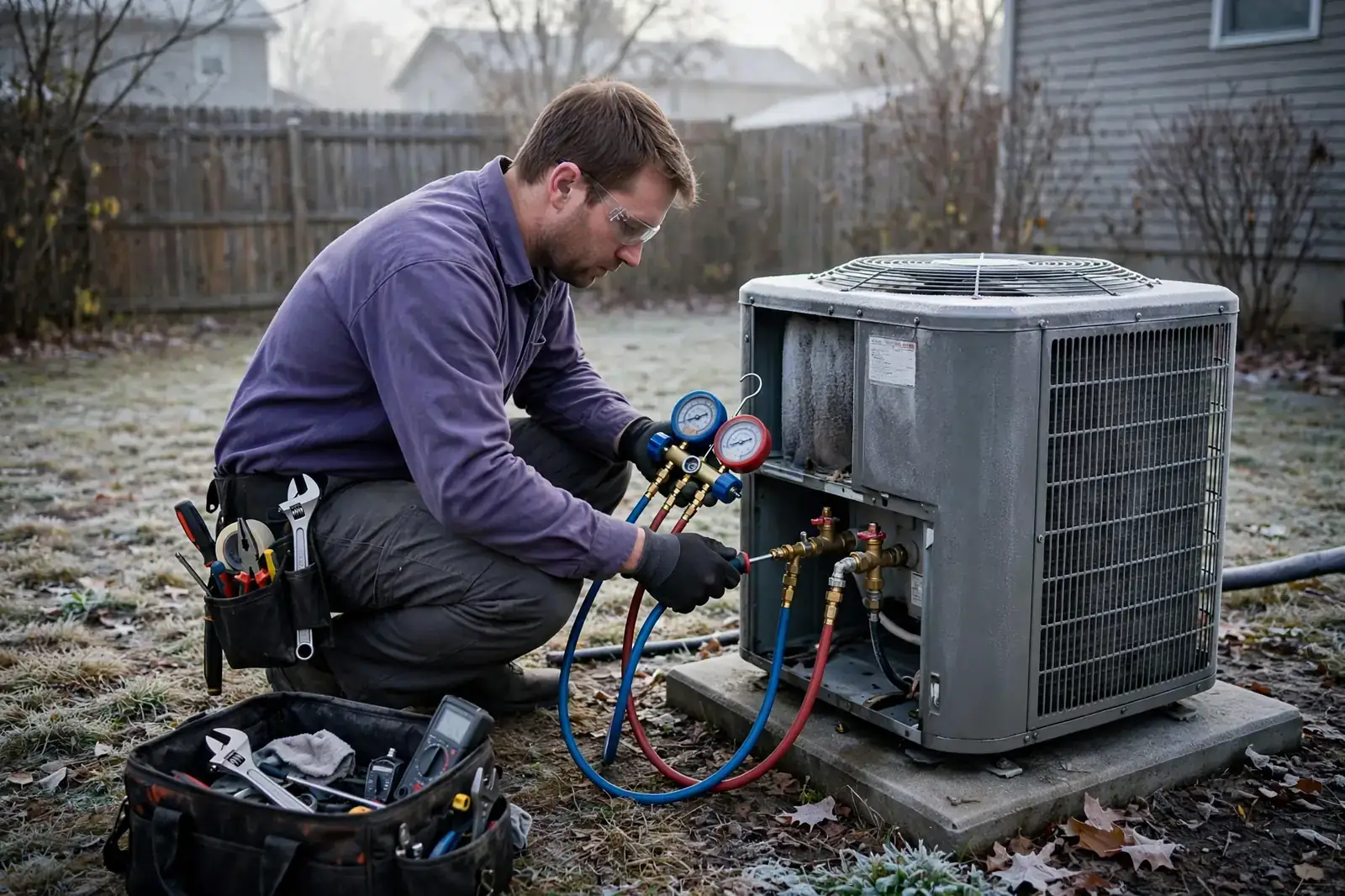
Heat Pump Repair · Gallatin & Sumner County
Heat pumps fail differently than furnaces, so they need a tech who thinks in heat-pump terms: refrigerant charge, defrost cycles, reversing valves, and backup heat.
(615) 412-2495October in Middle Tennessee
All summer your heat pump has been an air conditioner. Then one October night it flips to heating for the first time, and the next morning the thermostat reads "aux heat." Often nothing broke: the first switchover to heat mode is when homeowners meet their backup heat for the first time each year. But it's also when real problems surface, because the heating side of the system hasn't run in months.
Here's the test worth running before the weather turns: set the thermostat to heat, raise it a few degrees, and watch what happens. Short bursts of auxiliary heat that taper off are normal. A system stuck on aux heat for hours, ice forming on the outdoor unit in mild weather, or air from the vents that never gets warm means it's time to call. For heat pump repair in Gallatin from techs who speak fluent heat pump, call Gallatin HVAC Repair Pro at (615) 412-2495.
The big Middle TN question
Yes, and this is the question we hear most every winter. A heat pump doesn't create heat the way a furnace does; it moves heat from outside to inside, and it keeps working well below freezing. What changes is capacity: as the outdoor temperature drops, each cycle moves less heat, so the system runs longer. Somewhere in the mid-20s to low-30s, most systems reach their balance point, where backup heat has to help hold your set temperature.
The trouble version is a heat pump that can't keep up in mild weather or runs backup heat constantly. When January cold snaps roll across Sumner County and the wind comes off Old Hickory Lake, a healthy heat pump still does its share of the work. If yours doesn't, the refrigerant charge, the defrost system, or outdoor airflow is usually why. Our heat pump vs. furnace guide for Middle TN digs deeper into how each system handles our winters.
The bill-shock question
Auxiliary heat is electric resistance backup heat, essentially a giant toaster inside your air handler. It exists for two reasons: to help out when the heat pump can't meet demand, and to keep you warm during defrost cycles. It works fine, but it uses roughly three times the electricity of the heat pump's normal operation. That's why a few cold weeks can double a bill that was perfectly normal in November.
Short aux-heat runs are normal. The red flag is a thermostat showing "aux heat" for hours, or a bill that spikes without extreme weather to explain it. That usually means low refrigerant, a failed defrost control, a bad sensor, or a misconfigured thermostat. Our breakdown on why emergency and aux heat spike your electric bill covers it in full. If yours won't stop running, we'll find the cause.
Defrost cycle
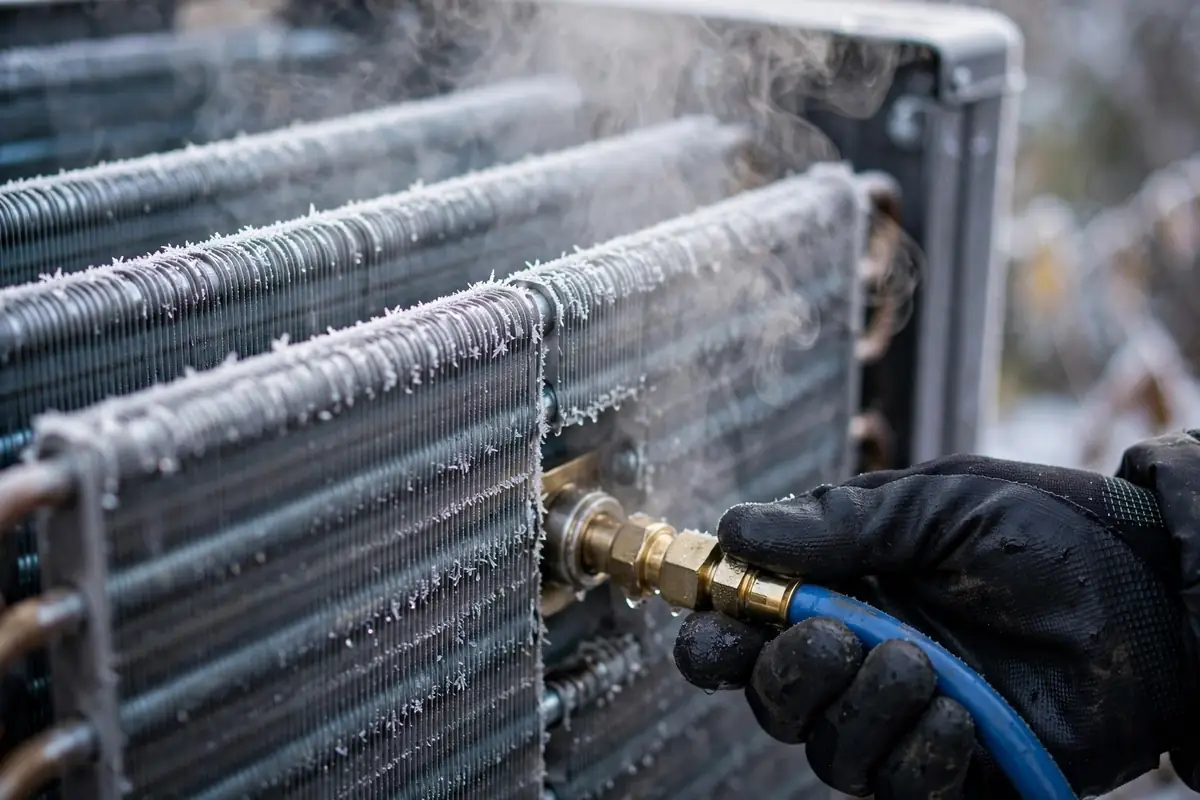
A thin layer of frost on the outdoor coil during cold weather is completely normal. Your heat pump runs a defrost cycle to melt it off, and you might see steam or vapor rising as it switches modes. That vapor looks alarming the first time, but it's the system working as designed.
Thick ice that never melts is a different story. Ice building up over the fan blades, ice on the refrigerant lines, or a unit that stays frozen for days points to a failed defrost sensor or control board, low refrigerant charge, or restricted airflow around the unit. Left alone, ice can wreck the outdoor fan and strain the compressor. The basic principle is simple once you see it: how heat pumps work explains the refrigeration cycle your system runs in reverse. If your defrost cycle isn't keeping up, a seasonal tune-up is the cheapest way to catch it early.
What breaks
The valve that switches your system between heating and cooling can stick, leaving you blowing cold air in January. It may also buzz or hum loudly before it fails.
Refrigerant doesn't get used up, so a low charge means a leak. Symptoms: weak heating and cooling, endless run times, and ice on the lines.
A bad defrost sensor or board means the unit never melts its own frost. Ice builds until the fan or compressor is damaged.
A failed sensor, sequencer, or thermostat setting can lock the backup heat on, which is how a normal January turns into a shocking electric bill.
No airflow across the outdoor coil means no heat transfer. Pressures spike and the compressor shuts down to protect itself.
Heat pumps need a thermostat configured for heat pump operation. A standard thermostat on a heat pump system causes short cycling and constant backup heat.
The part that makes it a heat pump
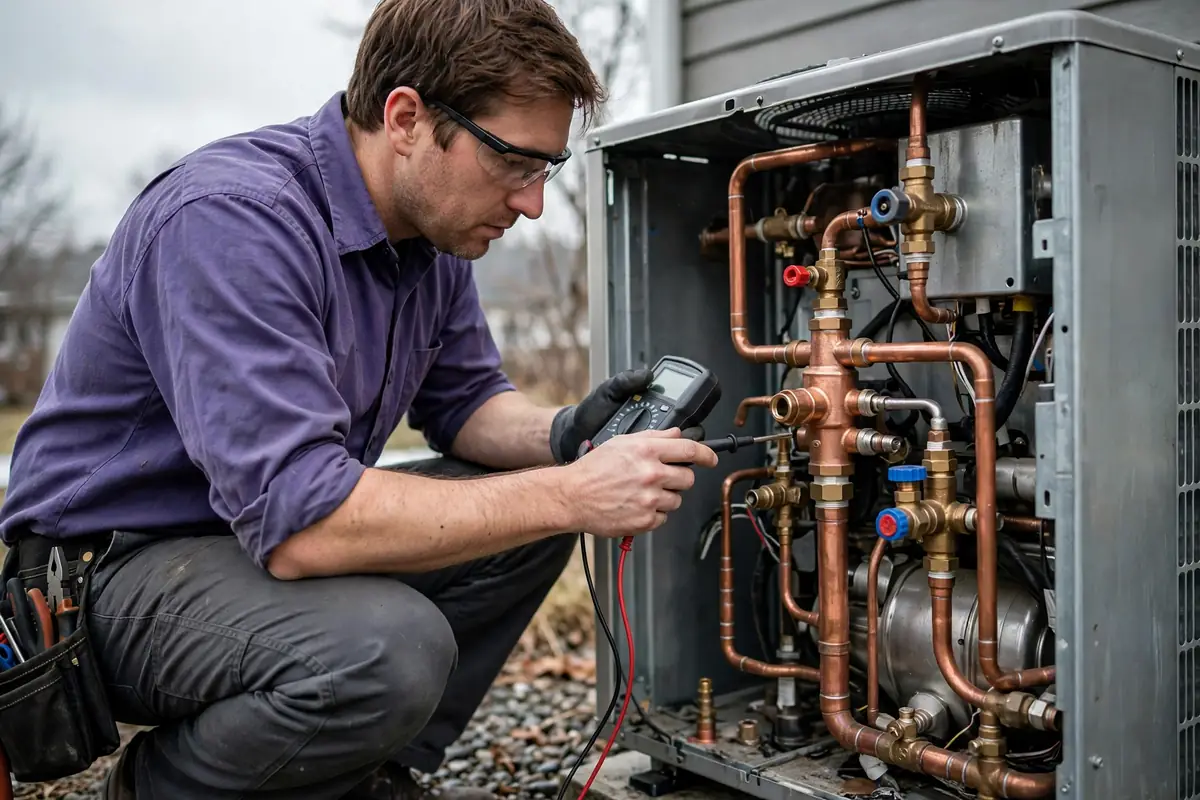
The reversing valve is what turns an air conditioner into a heater. It reverses the direction of refrigerant flow, so the outdoor coil that dumped heat all summer starts collecting it instead. When the valve sticks or its solenoid fails, the system gets locked in one mode: cooling when you want heat, or heat when you want cooling.
The classic symptom is a system that cools fine in summer but blows lukewarm air the first time you call for heat. Replacing a reversing valve involves refrigerant recovery, so it's technician work, but for us it's a routine repair.
When repair isn't enough
We start every visit repair-first. But a heat pump past 12 to 15 years that needs a compressor and has been living on backup heat is worth an honest conversation about replacement. A right-sized modern system cuts the aux-heat hours that drive winter bills, and ENERGY STAR's guidance on efficient heat pumps is a solid reference for what today's equipment can do.
If it comes to that, we'll walk you through heat pump installation the same way we do repairs: options, numbers, no pressure.
We service heat pumps across Gallatin and Sumner County, including the newer developments in Cambridge Farms and Clear Lake Meadows where heat pumps are common, plus Grandview Estates and the neighborhoods along TN-386. A heat-pump-compatible thermostat is one of the simplest upgrades we recommend if yours was never set up right.
Not sure what you have?
Heat pumps and furnaces can feel identical when they break, and plenty of Gallatin homeowners aren't sure which one they own. Our general heating repair page helps you figure that out in about a minute. Already sure it's gas? Head to gas furnace repair for the furnace-specific version of this page.
Common questions
Some capacity loss is normal: a heat pump moves heat rather than creating it, so it delivers less as the outdoor temperature falls. Around the mid-20s to low-30s Fahrenheit, most systems need backup heat to hold the set temperature. If your system struggles in mild weather, runs aux heat constantly, or can't recover overnight, that's not normal and it needs a diagnostic.
Auxiliary heat is electric resistance backup that kicks in when the heat pump alone can't meet demand or during defrost cycles. It works, but it uses roughly three times the electricity of the heat pump's normal operation. Brief aux-heat runs are normal; if it stays on for hours or days, something is keeping the heat pump from doing its job.
A light frost on the outdoor coil during cold weather is normal, and the unit melts it off in regular defrost cycles. Thick ice that never melts, ice covering the fan, or ice on the refrigerant lines can signal a failed defrost sensor, a low refrigerant charge, or poor airflow. Persistent ice should be checked before it damages the fan or compressor.
The reversing valve is the component that lets a heat pump switch between heating and cooling by reversing refrigerant flow. If it sticks or fails, the system can get locked in one mode, blowing cold air when you call for heat or warm air when you call for cooling. It can also buzz or hum loudly. A failed reversing valve is a repair for a technician, not a DIY fix.
Common signs are weak heating and cooling, long run times without reaching the set temperature, ice on the outdoor unit or refrigerant lines, and a hissing sound near the lines. Refrigerant doesn't get used up. A low charge means there's a leak that should be found and repaired rather than just topped off.
Honest heat pump diagnostics from Gallatin HVAC Repair Pro. Call now for service across Gallatin and Sumner County.
(615) 412-2495 Call Now for Heat Pump Repair