Maintenance guide
How Often Should You Service Your HVAC System?
Twice a year: cooling in the spring, heating in the fall. Here is why that rhythm matters, what a real tune-up includes, and what skipping it costs.
(615) 412-2495- The twice-yearly case, explained
- What a real tune-up includes
- Skipped-maintenance stories
The short answer
Twice a year: spring and fall
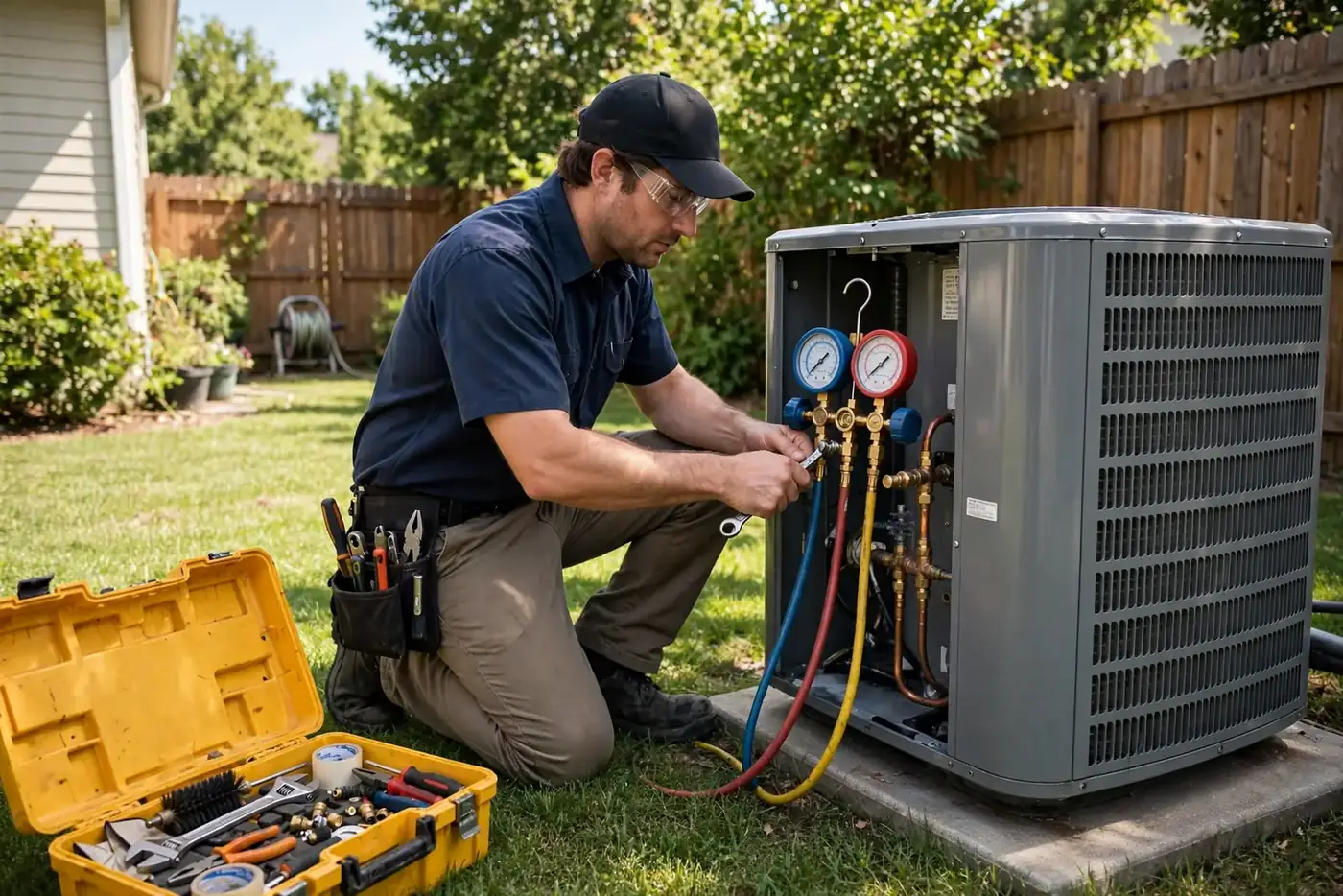
Your HVAC system has two jobs, cooling and heating, and each deserves its own checkup before its season starts. A cooling tune-up in spring catches refrigerant, airflow, and electrical issues before your AC runs daily for months. A heating tune-up in fall verifies ignition, safety controls, and the heat exchanger before the system runs through winter. One visit a year is better than none, but it leaves half the system unchecked going into its hardest season.
This is not just our opinion. ENERGY STAR's maintenance recommendations call for regular professional checkups as the foundation of efficient, reliable operation. In Gallatin, where systems work hard against summer humidity off Old Hickory Lake and then pivot to winter heating, that twice-yearly rhythm matters more than it does in milder climates.
The rationale
Why twice a year instead of once?
Think about what your system goes through. From June through September in Sumner County, your AC or heat pump runs in cooling mode nearly every day, often for hours at a time. Then it sits through the shoulder seasons and switches to heating, a completely different mode of operation with different components under stress: igniters, gas valves, heat exchangers, defrost controls.
A spring visit tunes the system for the marathon ahead. A fall visit checks the parts that have sat idle for six months. Homeowners sometimes ask if they can just do one annual visit and cover both. You can, but you will always be checking one mode right after its season instead of before it. The whole point of maintenance is catching problems before they matter, and timing is half the value.
There is also a practical angle: spring and fall are when technicians have the most availability. Calling for a tune-up in October means a relaxed, thorough visit. Calling in January because the heat died means an emergency slot and a system that failed on the coldest night of the year. Our HVAC maintenance page lays out what our twice-yearly visits include.
What you are paying for
What a real tune-up actually includes
Not all tune-ups are equal. A legitimate maintenance visit should cover the items below. If a company's "tune-up" is a filter change and a sticker on the unit, you are not getting maintenance.
| Check | Cooling visit (spring) | Heating visit (fall) |
|---|---|---|
| Coils | Clean indoor and outdoor coils | Inspect heat exchanger for cracks |
| Refrigerant | Check levels and look for leaks | Verify heat pump charge and defrost |
| Electrical | Test capacitor, contactor, wiring | Test ignition, gas valve, safeties |
| Airflow | Check blower, filter, static pressure | Verify airflow and temperature rise |
| Drainage | Clear condensate drain line | Check condensate where applicable |
| Controls | Verify thermostat and staging | Verify thermostat heat and aux staging |
A good tech will also tell you what they found in plain language, including things that are wearing but not yet failed. That heads-up is the real product you are buying: time to plan instead of panic. It is also worth knowing that most manufacturer warranties require proof of regular maintenance, so skipped tune-ups can cost you warranty coverage when you need it most.
Cautionary tales
What skipped maintenance actually costs
We see the same stories every year across Gallatin, from Fairvue Plantation to Kennesaw Farms. A small refrigerant leak goes unnoticed for two summers because nobody checked the charge. The compressor runs hot and starved until it burns out, turning a few-hundred-dollar leak repair into a compressor replacement worth thousands. A clogged condensate drain nobody cleared backs up and damages a ceiling. A cracked heat exchanger nobody inspected becomes a safety issue instead of a planned replacement.
None of these are freak accidents. They are the normal end state of small problems left alone. Maintenance does not prevent every breakdown, and any company that promises that is selling something. But it catches the slow failures while they are still cheap, and it gives you information about your system's trajectory instead of surprises.
The honest version of the sales pitch: a tune-up costs a fraction of a single emergency repair visit, and the systems that get regular maintenance consistently outlast the ones that do not. If your system has been running without professional attention for a few years, a catch-up visit is still worth doing. We would rather find the wear now than meet you during a breakdown later, and you can read about how Gallatin HVAC Repair Pro approaches honest service anytime.
Plans
Are maintenance plans worth it?
Often, yes, with one condition: the plan has to deliver real tune-ups, not just a discount card. A worthwhile plan includes both seasonal visits with the full checklist, priority scheduling when something breaks, and a meaningful discount on repairs. It should spell all of that out in writing.
What to watch for: plans that charge a monthly fee but only include one vague annual visit, plans where the "tune-up" is fifteen minutes long, and plans that lock you in with no clear benefit. Ask what happens during each visit, how long it takes, and what the repair discount actually covers. A company confident in its maintenance work will answer all of that directly.
One more consideration for indoor comfort: maintenance visits are also when airflow and filtration get checked, which ties directly into indoor air quality. In a humid market like ours, a system that is not draining and filtering properly is a comfort problem, not just an efficiency one.
Common questions
Maintenance FAQs
Twice a year: a cooling tune-up in spring and a heating tune-up in fall. A real tune-up includes cleaning coils, checking refrigerant levels, testing electrical components and safety controls, inspecting the heat exchanger, clearing the drain line, and verifying airflow and thermostat operation.
Yes, capacitors are one of the most common legitimate HVAC repairs. They help motors start and run, and they wear out with heat and age. A good technician will show you the failing reading and explain it, not just hand you a bill.
Refrigerant is not consumed during normal operation, so repeated top-offs mean there is a leak. An honest repair finds and fixes the leak rather than refilling every year. Yearly refills are a sign the real problem was never addressed.
A good plan is worth it if it includes genuine twice-yearly tune-ups, priority scheduling, and a repair discount, and if the company actually performs the full checklist each visit. Ask what is included in writing and skip plans that are just a filter change with a logo on it.
Due for a tune-up?
Spring or fall, we will give your system the full checkup it deserves.
(615) 412-2495 Call Gallatin HVAC Repair Pro